
There are some misconceptions about wooden chopping boards that I am going to clear up in this blog post.
Wood is a natural material, therefore it moves
First of all, we need to understand the material itself. Wood is a natural product: it is beautiful, vibrant and alive. This is what makes it such an amazing material to work with and have around your home. It also means that, like everything in nature, it is prone to having some unpredictable properties.
One of the main things to watch out for in your chopping board is warping. Warping happens with all types of wood when it expands or contracts due to changes in humidity and temperature. When the wood warps, it changes shape and bends, which causes cracks to form. You want to avoid this, as it might render your chopping board useless. There are a few ways you can prevent this from happening by caring for your chopping board.
How to wash wooden items
Wash them with warm soapy water and allow it to dry fully.
Unless your board has been used with raw meat, soap may not be strictly necessary. After cutting bread, for example, simply wiping it with a damp cloth is more than suitable. What is important here is that you remove any leftover food and that you do not put the chopping board away while it is still wet. You can either dry it with a towel or stand it on its side and allow it to drip dry. It should not be laid flat until it is completely dry.
Can I put it in the dishwasher?
No, never! Wooden items should never be put in the dishwasher as the sudden change in temperature and humidity can cause them to swell and warp. Even just one outing in the dishwasher could ruin your chopping board!
How to extend your board’s lifespan
Food-safe oil can be used to extend the lifespan of a chopping board, as it seeps into the pores of the wood and prevents water from going too deeply into it. Mineral oil is my favourite type of oil to use for this purpose as it is food-safe, fairly inexpensive and easy to apply. If you wish to use a different type of oil, you must ensure that it is food safe. It is not advisable to use cooking oil, as it can go rancid which will make the board smell bad and become sticky.
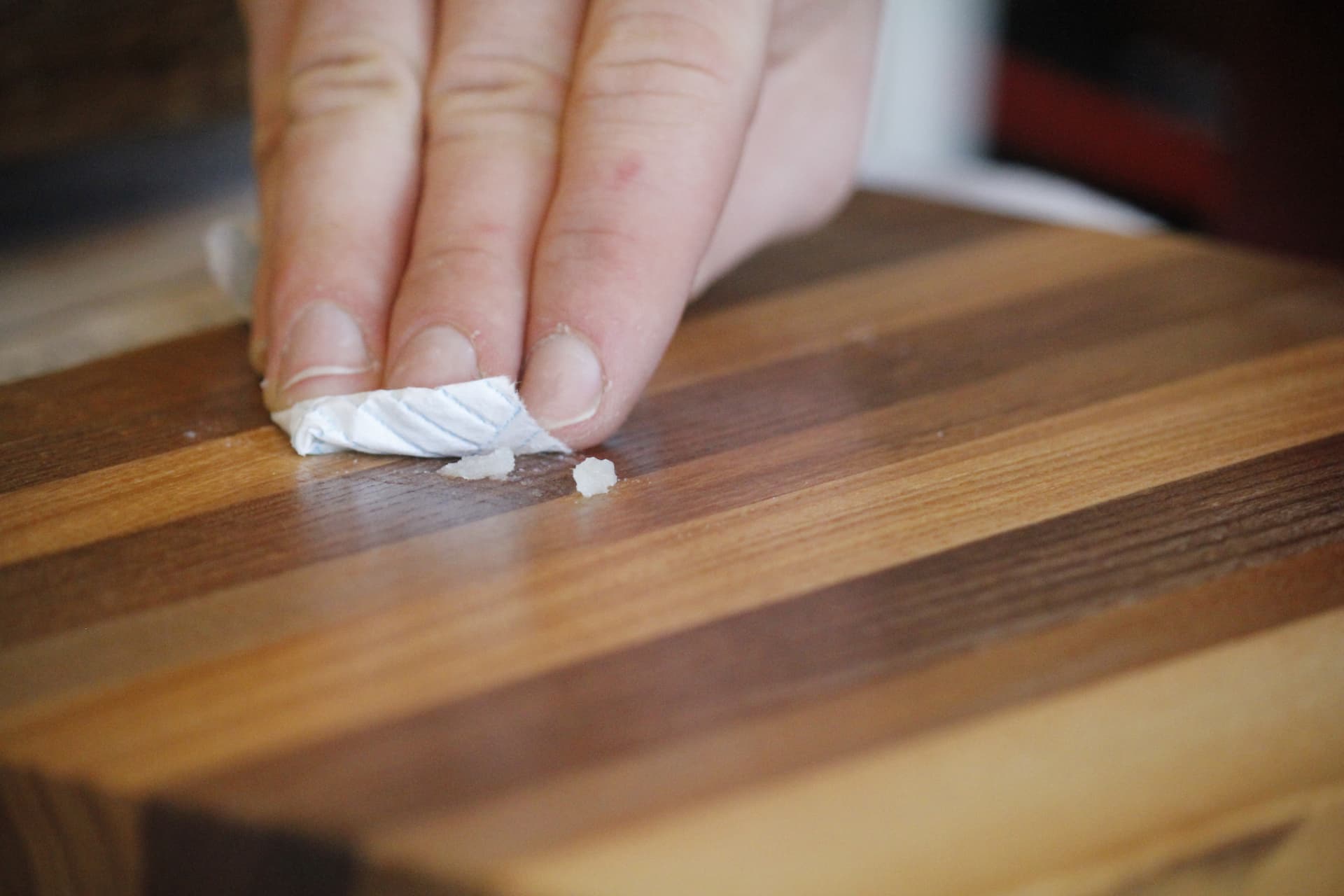
To apply the oil, simply pour some onto the board and wipe it with a piece of cloth or paper towel until you have covered the whole board. Then leave for 20 minutes before wiping off any excess oil.
Once you have oiled it ,you can buff it with food-safe wax (natural beeswax works well) to give the board a nice sheen and further improve the water resistance of the wood.
How often should I oil/wax my chopping board?
This is entirely up to you. Some people will be very diligent and re-oil regularly whilst others never do. A wooden chopping board is still perfectly sanitary if you never re-oil it. Re-oiling will rejuvenate you board making it look more like new and will help to reduce the risk of the board warping or cracking.
A reasonable time frame for re-oiling, should you wish to do it, would be 2 or 3 times a year, depending on how regularly it is used. However, if you are not able to do it or do not wish to keep to the schedule, your chopping board will still function absolutely fine.
I want to do a more thorough cleaning
Every so often, you may want to deep clean your chopping board. This is easy. First scrub it with some lemon juice and salt applied to it and then wash it with warm, soapy water. You do not need to do this every time you clean it or even at all. People have different standard for cleanliness and if you are towards the end where you want to be able to deep clean your chopping board then cleaning it with salt and lemon juice twice a year would suffice. Once you’ve cleaned it this way, you may as well oil it as well while you’re at it!
Is it safe to use a wooden chopping board?
Yes, it is. Some people think that because the scratches in the wood caused by normal use will be places for bacteria to grow. There are two reasons that you do not need to worry about this.
- When you are washing the board with warm water, the fibres in the wood will swell up and this will cause the scratches in the board to open up more. This will allow the water and soap to flush into the scratches and remove any bacteria that may be building up. Scratches in plastic boards, on the other hand, do not open up when cleaning and so they are much more at risk of growing bacteria as they cannot be cleaned properly.
- Wood contains tannins. Tannins are naturally occurring organic compounds which you can find in many places in nature including in wood. The tannins found in wood are antibacterial and so will reduce the likelihood of harmful bacteria from getting a foothold on your chopping board. That being said, it is still important to wash your chopping board after use, especially when used with raw meat – tannins can only do so much!
I hope this blog post was useful to you and if you have any comments or questions, feel free to contact me!